
Hemodialysis and peritoneal dialysis: how they compare
13 June 2026 · By Dialysis.mu · Updated 17 June 2026
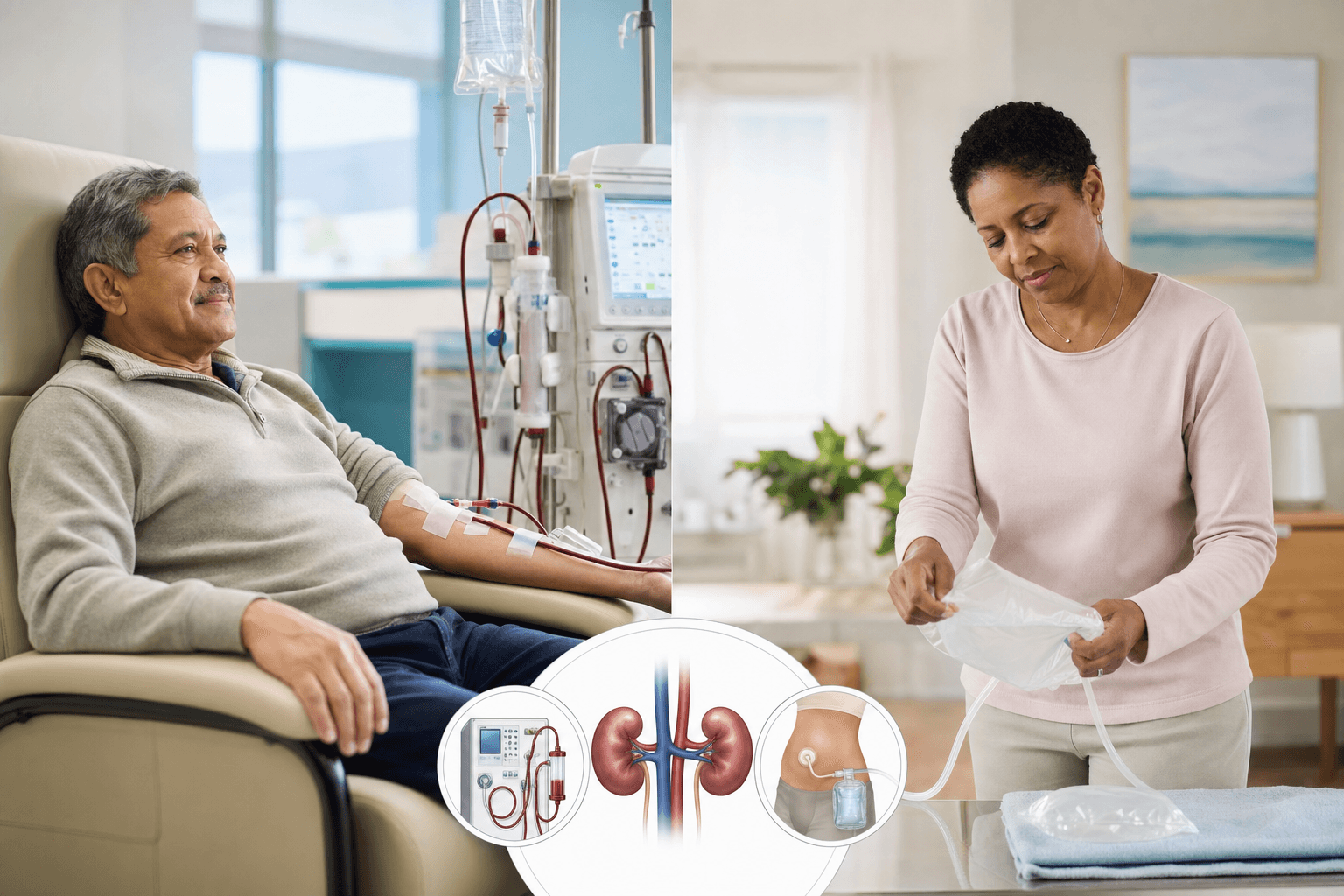
When the kidneys need help
When kidney function falls very low, the body needs help to remove waste and extra fluid that the kidneys can no longer clear. Dialysis is a treatment that does this work. It does not cure kidney disease, but it can keep people well and active for many years.
There are two main types of dialysis, hemodialysis and peritoneal dialysis. They reach the same goal in different ways. Understanding how each works can make the choice feel less overwhelming and more like a decision you share with your care team.
How hemodialysis works
Hemodialysis uses a machine and a special filter to clean the blood outside the body. Blood is gently drawn from the body, passed through the filter where waste and extra fluid are removed, and then returned to the body.
Where and how often
Hemodialysis is most often done at a dialysis centre, usually three times a week, with each session lasting around four hours. Some people are able to do hemodialysis at home after training, though this is less common.
To allow blood to flow in and out smoothly, a small access point is created, usually in the arm. This is often a fistula, made by joining an artery and a vein in a minor operation, which is then allowed to heal before use.
What life can look like
Many people settle into a routine around their sessions and use the time to rest, read or chat. Because treatment happens on set days, there is structure to the week. Travel and daily plans are arranged around the schedule, and centre staff are on hand throughout.
How peritoneal dialysis works
Peritoneal dialysis cleans the blood inside the body, using the lining of the abdomen, called the peritoneum, as a natural filter. A soft tube is placed in the abdomen during a small operation. A special fluid flows in through the tube, draws waste and extra fluid from the blood across the lining, and is then drained out and replaced.
Where and how often
This type of dialysis is usually done at home, which many people value. There are two common approaches. One involves several fluid exchanges by hand through the day. The other uses a machine overnight to do the exchanges while you sleep, leaving the day freer.
What life can look like
Peritoneal dialysis offers more flexibility and independence, since it fits around home and work life. It does, however, ask for daily routine and careful attention to cleanliness to reduce the risk of infection. With training and support, many people manage it confidently at home.
Comparing the two
Neither option is simply better than the other. The right choice depends on your health, your home situation, your lifestyle and your own preferences.
- Hemodialysis happens mostly at a centre, on set days, with staff present, and needs an access point in the arm.
- Peritoneal dialysis happens mostly at home, every day, offers more flexibility, and needs a tube in the abdomen and careful hygiene.
- Some people change from one type to the other over time as their needs change, which is completely normal.
Thinking about dialysis in Mauritius
Access to dialysis services, including the location of centres and the support available for home treatment, can shape what works best for you. Distance to a centre, family support and your daily responsibilities are all worth weighing up. Your kidney team can talk you through what is available locally.
Preparing for the conversation
If dialysis is being discussed, it can help to think about questions such as these before you meet your team.
- Which type of dialysis suits my health and my home life?
- What would a typical week look like for me?
- How would treatment affect my work, family and travel?
- What support is available to help me learn and feel confident?
A gentle reminder
This article gives a general comparison to help you understand dialysis. It is not personal medical advice. The decision about whether and how to start dialysis should always be made with your doctor and kidney care team, who know your full situation. Please bring your questions and concerns to them.
Learning how the two types of dialysis compare can turn an unfamiliar idea into a clearer set of choices. With good information and steady support, many people find dialysis becomes a manageable part of life.
Healthy kidneys are central to a longer, healthier life. Explore the wider Medtech health ecosystem.